By TB Staff
Ever found yourself lost on a website, clicking around trying to find a specific item? Chances are, the site's organization, or lack thereof, was the culprit. That's where a product taxonomy comes in. Think of it as the secret sauce that makes online shopping smooth and efficient. In this article, we'll unpack what is a product taxonomy and why it's a big deal for your business. You'll learn how to build one that works and how it can actually help you sell more.
Key Takeaways
- A product taxonomy is a system for organizing and labeling your products, making them easier for customers and search engines to find.
- It's a core part of your website's information architecture, directly impacting how users experience your site.
- Building a good taxonomy involves understanding your customers, looking at competitors, and testing your setup.
- Optimizing your taxonomy for search engines means using keywords and creating clear site structures, like with breadcrumbs.
- A well-managed taxonomy improves customer experience, which can lead to more sales and better content management.
Understanding What Is A Product Taxonomy

Defining Product Taxonomy
Think about how you organize your closet. You probably group similar items together, right? Maybe shirts go in one section, pants in another, and shoes on a shelf. A product taxonomy is pretty much the same idea, but for your business's products. It's a structured way to classify and organize your products into categories and subcategories. This system helps you and your customers understand what you offer. It's not just about listing items; it's about creating a logical map of your entire product catalog. This map makes it easier to find things, whether you're a customer browsing your site or an employee managing inventory.
The Role of Taxonomy in Information Architecture
Information architecture (IA) is all about how you structure and present information so people can find what they need. Taxonomy is a key part of that. It's the backbone that supports how your content is organized. Without a good taxonomy, your website or catalog can feel like a messy room where nothing is in its place. Customers get frustrated and leave. A well-defined taxonomy, on the other hand, makes your site intuitive. It guides users through your offerings, much like clear signage helps you find your way around a large store. It helps people find what they're looking for quickly, which is a big deal when you consider that many users leave a site if they don't find what they need within seconds.
A well-structured taxonomy isn't just for show; it directly impacts how easily customers can interact with your products and, ultimately, how successful your business is online. It's about making sense of complexity.
Why Product Taxonomy Matters for Your Business
So, why should you care about product taxonomy? For starters, it directly affects your customer's experience. When customers can easily find what they're looking for, they're more likely to buy. This means better sales and happier customers. It also helps with your internal operations. Imagine trying to manage inventory or run marketing campaigns without a clear understanding of your product groups. It would be chaos. A good taxonomy simplifies these tasks. It also plays a role in search engine optimization (SEO), helping search engines understand your products and rank them appropriately. For example, organizing vitamins and supplements with clear categories and attributes can help customers find specific dietary supplements they need, improving their shopping journey.
Here are a few key reasons why it's important:
- Improved Customer Navigation: Customers can find products faster, reducing frustration and bounce rates.
- Increased Sales: Easier product discovery leads to higher conversion rates.
- Better Inventory Management: Clear organization simplifies stock tracking and management.
- Enhanced Marketing Efforts: Targeted campaigns become more effective when products are well-defined.
- SEO Benefits: Search engines can better understand and index your product catalog.
Key Components of Product Taxonomy
When you're setting up your product taxonomy, you'll run into a couple of main ways to organize things. Think of these as the building blocks for how customers will find what they need on your site. Understanding these structures is key to making your product catalog easy to use.
Hierarchical Taxonomies
This is probably the most common type you'll see. It works like a tree, starting broad and getting more specific. You have a main category, and then subcategories branch off from there. For example, you might start with 'Home Goods,' then 'Kitchen,' then 'Cookware,' and finally 'Pots and Pans.' It's a straightforward, text-based system that works well for many businesses, especially if your product range isn't overwhelmingly huge.
- Parent Category: The broadest grouping (e.g., 'Electronics').
- Child Categories: More specific groups that fall under the parent (e.g., 'Televisions').
- Sub-Child Categories: Even more specific groupings (e.g., 'Smart TVs').
This structure is easy for people to follow because it mirrors how we often think about organizing information. It's like putting things into folders and subfolders on your computer.
While simple and familiar, a purely hierarchical system can sometimes feel rigid. If a product could logically fit into multiple branches, it can become tricky to decide where it belongs without creating confusion.
Faceted Taxonomies
Faceted taxonomies, often called 'filters' or 'attributes,' add another layer of organization. Instead of just one path, customers can narrow down their search using various characteristics. Think about shopping for patio furniture. You might filter by 'color,' 'material,' 'price,' or 'brand.' These facets don't change the main category structure but provide multiple ways to refine results. This is where product taxonomy in e-commerce really shines, allowing for flexible discovery.
- Attributes: These are the characteristics you filter by (e.g., Size, Color, Material).
- Values: These are the specific options within each attribute (e.g., for Size: Small, Medium, Large; for Color: Red, Blue, Green).
These are incredibly useful for larger inventories because they let customers pinpoint exactly what they want without having to click through many levels of categories.
Combining Taxonomy Types for Optimal Results
Most businesses find that the best approach is to use a combination of both hierarchical and faceted taxonomies. You start with a clear hierarchical structure to give your site a logical flow, and then you add facets to allow for detailed filtering within those categories. This gives you the best of both worlds: a well-organized main structure that's easy to understand, plus the flexibility for customers to find specific items quickly. It’s about creating a system that’s both orderly and adaptable to your customers’ shopping habits.
Building an Effective Product Taxonomy
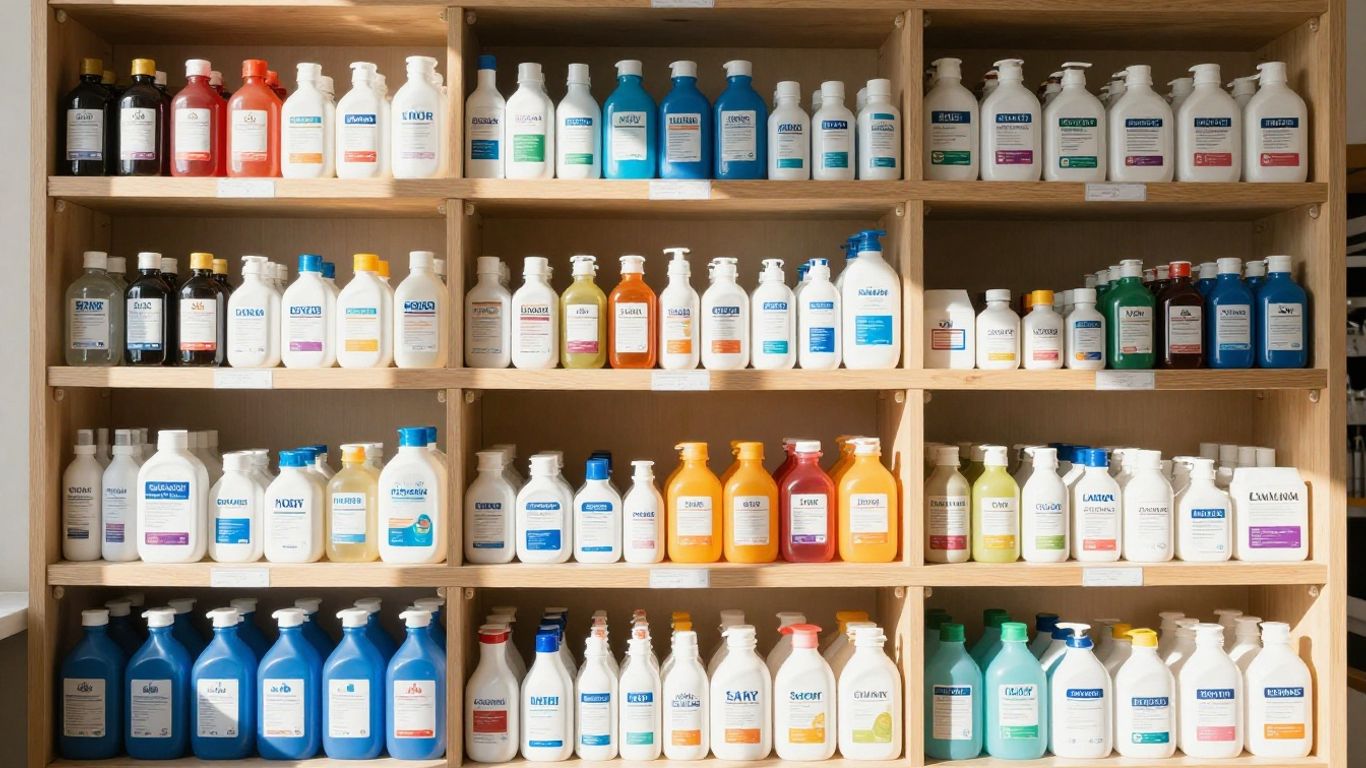
So, you've got a handle on what a product taxonomy is and why it's important. Now, let's talk about actually building one that works for your business. This isn't just about slapping some categories together; it's about creating a system that makes sense to your customers and helps them find what they need without pulling their hair out. A well-built taxonomy is a direct reflection of how well you understand your audience and your products.
Customer Behavior Analysis
Before you even think about categories, you need to understand how people shop on your site. What words do they use when they search? How do they browse through your existing products? Looking at this data gives you real insights. You can see which product categories are popular, where people get stuck, and what they're looking for but can't find. This kind of research is the foundation for a taxonomy that actually helps people.
- Analyze search queries to see common terms and phrases.
- Track user journeys to identify drop-off points or confusing paths.
- Review customer feedback for suggestions on organization.
Understanding your customer's shopping habits is the first step to creating a logical and helpful product structure. It's about putting yourself in their shoes.
Competitive Landscape Research
Don't just look inward; look at what your competitors are doing. How do they organize their products? Are there gaps in their categorization that you can fill? Sometimes, you can find opportunities by seeing where competitors are weak or where they haven't focused. This doesn't mean copying them, but it can give you ideas and help you position your own products more effectively. It's about finding your unique space in the market.
Iterative Testing and Refinement
Building a taxonomy isn't a one-and-done task. You need to test it and be ready to make changes. Put yourself in the customer's place and try to find products using your new structure. Does it make sense? Is it easy to get from a broad category to a specific item? Document any issues or confusing parts. This process of testing and tweaking is how you make sure your taxonomy stays effective over time. It's a continuous cycle of improvement, much like refining your product catalog.
- Conduct internal walkthroughs simulating customer searches.
- Gather feedback from a small group of users before a full rollout.
- Monitor key metrics like bounce rate and conversion after implementation.
This ongoing process is key to maintaining a taxonomy that truly serves your business and your customers. Remember, a good taxonomy is a living thing; it needs to adapt and grow with your business and your customers' needs. Using a Product Information Management system can greatly simplify this iterative process.
Optimizing Your Product Taxonomy for Search Engines
Integrating Keywords Seamlessly
When you're building out your product taxonomy, think about how people actually search for things. This means weaving relevant keywords into your category names, subcategories, and even product descriptions. It's not about stuffing keywords everywhere, but about making sure that when someone types a search query into Google, your products are likely to show up. Do some digging to find out what terms your customers are using. This research will help you structure your taxonomy in a way that aligns with what people are looking for, making it easier for both customers and search engines to find your products. For example, if you sell pet supplies, you'll want to use terms like "dog food" or "cat toys" rather than just "pet items." This approach helps search engines understand the context of your products and rank them appropriately. You can find specific items for your pets' wellness and dietary preferences by using filters like these.
Leveraging Breadcrumbs for Structure
Breadcrumbs are those little navigation links you see at the top of a webpage, showing you where you are on a site, like "Home > Electronics > Televisions > Smart TVs." They're super helpful for users, but they're also a big win for search engines. By using breadcrumbs, you're giving search engines a clear map of your website's structure. This helps them understand the relationship between different categories and subcategories, which can boost your site's authority for those topics. It's a simple way to show Google how your content is organized, making it easier for them to index your pages correctly. This structure is particularly useful when dealing with complex product catalogs, like those found in the automotive industry, where filtering by vehicle fit is important.
Enhancing Product Detail Pages
Your product detail pages (PDPs) are prime real estate for search engine optimization. Don't just list the product specs; use this space to your advantage. Write a short, keyword-rich introduction for each product. Think about what makes this product special and use language that potential buyers would use. You can also link to relevant blog posts or other related products on your site. This internal linking helps spread link equity across your site and keeps users engaged longer. It's also a good place to include metadata, like title tags and meta descriptions, that accurately describe the product and encourage clicks from search results. Managing all this content can be simplified with a Product Information Management system, which helps keep your SEO-friendly content organized and ready for updates.
A well-structured product taxonomy acts as a roadmap for search engines, guiding them through your product catalog. This clarity helps them understand your offerings better, leading to improved search visibility and more qualified traffic to your site. It's about making your products discoverable by being organized and using the language your customers speak.
Managing and Evolving Your Taxonomy
Your product taxonomy isn't a set-it-and-forget-it kind of thing. Think of it more like a living document that needs regular attention. As your business grows and your product catalog expands, your taxonomy will need to change too. This is especially true if you start selling on different marketplaces, as each might have its own specific requirements for how products should be categorized.
The Continuous Nature of Taxonomy
Taxonomies are a work in progress. They require changes as your business grows and your product information might need to be transformed when you expand to certain marketplaces. The process for each channel should always be consistent, especially when adding new products to an existing structure. This can be quite daunting when you are dealing with large volumes of data.
- Regular Review: Schedule periodic check-ins to assess the health and relevance of your taxonomy.
- Adaptability: Be prepared to adjust categories and attributes as new products are introduced or market trends shift.
- Consistency: Maintain a uniform approach across all platforms and sales channels.
Adapting to Marketplace Requirements
When you decide to sell your products on external platforms, you'll quickly find that they often have their own preferred ways of organizing items. For instance, a marketplace might require specific attributes for nursery furniture that differ from your internal system. You'll need to map your internal taxonomy to their structure, which can involve adding, removing, or modifying categories and attributes. This ensures your products are discoverable and comply with the marketplace's rules.
Managing taxonomy manually can be a burden. It is time-consuming, mundane, and can lead to errors. Automating processes where possible is key to maintaining accuracy and efficiency.
Utilizing Product Information Management Systems
This is where a Product Information Management (PIM) system really shines. A PIM tool can help you manage your taxonomy efficiently. You can tweak your data, automate categorization, and ensure your taxonomies are correctly formatted for different outputs. This makes it much easier to handle large amounts of product data and maintain consistency across all your sales channels. For example, if you sell car tires, a PIM can help you manage the complex attributes and categories required by various retailers and online stores, ensuring each product is listed correctly everywhere.
- Centralized Management: Keep all your taxonomy data in one place.
- Automation: Use PIM features to auto-categorize products and suggest tags.
- Data Transformation: Easily adapt your taxonomy to meet the specific needs of different marketplaces or sales channels.
The Impact of Product Taxonomy on Business Outcomes
So, you've put in the work to build a solid product taxonomy. That's great! But what does it actually do for your business? It's not just about making things look tidy; a well-structured taxonomy directly affects how your customers interact with your products and, ultimately, how much you sell. Think of it as the backbone of your online store's organization.
Improving Customer Navigation and Experience
When customers can easily find what they're looking for, they stick around. A confusing site, on the other hand, sends them running. Statistics show that a significant percentage of users leave a site if they can't find what they need within seconds. A good taxonomy acts like a clear map, guiding shoppers through your product catalog without frustration. This means fewer abandoned carts and happier customers who are more likely to return.
- Clearer product discovery: Customers can browse categories and filters without getting lost.
- Reduced search friction: When customers use your site's search, relevant results appear faster.
- Increased engagement: Users spend more time on your site when they find what they want easily.
A poorly organized product catalog is like a messy store. Customers might eventually find what they need, but the effort involved can be so high that they decide to shop elsewhere. Your taxonomy is the solution to this problem, making the shopping journey smooth and pleasant.
Boosting Sales and Conversion Rates
There's a direct link between how easy it is to shop on your site and how much you sell. When your product taxonomy is logical and user-friendly, customers are more likely to complete a purchase. This isn't just about making sales; it's about making more sales. For example, a well-organized computer accessories section allows customers to quickly narrow down their choices, leading to quicker purchase decisions. Businesses that invest in good taxonomy often see a noticeable uptick in their sales figures.
| Metric | Before Taxonomy Improvement | After Taxonomy Improvement | Change |
|---|---|---|---|
| Conversion Rate | 1.5% | 2.2% | +46.7% |
| Average Order Value | $75 | $88 | +17.3% |
| Bounce Rate | 45% | 30% | -33.3% |
Enhancing Content Management Efficiency
Beyond customer-facing benefits, a strong taxonomy streamlines your internal operations. It makes managing your product information much simpler. When your products are categorized correctly, tasks like updating product details, creating marketing campaigns, or even expanding to new marketplaces become far less complicated. This efficiency gain means your team can focus more on strategic tasks rather than getting bogged down in data organization. A well-defined taxonomy is a foundational element for effective content management. Utilizing systems designed for this, like a Product Information Management system, can further automate and simplify these processes, leading to better overall product performance metrics.
Ever wonder how organizing your products can make a big difference in how well your business does? It's true! A good product setup helps customers find what they need faster and can even boost your sales. Want to see how it works? Check out our tools to build a better product list for your store. Visit our website today to learn more!
Putting It All Together
So, you've seen how a product taxonomy is more than just a way to organize things. It's a tool that can really help your customers find what they need, which in turn can boost your sales. It takes some effort to set up and keep updated, especially as your business grows or when you need to share your product information on different platforms. But by thinking about how your customers shop and using tools like a PIM system, you can build a structure that works. It’s not a one-and-done task, but the payoff in terms of a better customer experience and improved business performance is definitely worth it.
Frequently Asked Questions
What exactly is a product taxonomy?
Think of a product taxonomy like a super-organized filing system for all your products. It's a way to group and label your items so that customers (and your own team!) can easily find what they're looking for. It's like sorting your toys into different bins: cars, dolls, building blocks. This helps make sense of everything you offer.
Why should I care about organizing my products?
When your products are well-organized, customers have a much better time shopping. They can find what they need quickly and easily, which makes them happy. If they can't find things, they'll likely leave your site. Good organization also helps search engines understand your products better, leading to more visitors.
Are there different ways to organize products?
Yes, there are! One common way is like a family tree, where you have main categories that break down into smaller ones (like 'Electronics' -> 'Computers' -> 'Laptops'). Another way is using 'facets,' which are like filters you see on shopping sites (e.g., 'Brand,' 'Color,' 'Size'). Often, using a mix of both works best.
How do I figure out the best way to organize my products?
You should start by looking at how your customers shop and what words they use to search for things. Also, check out how your competitors organize their products. It’s a good idea to test your organization ideas to see if they make sense to shoppers before you fully commit.
Does organizing products help with online search (SEO)?
Absolutely! When you organize your products well and use the right keywords, search engines like Google can understand your site better. Using things like 'breadcrumbs' (links that show your path on the site) helps search engines see your product structure. Making sure your product pages are clear and helpful also boosts your search ranking.
Is setting up a product taxonomy a one-time job?
Not at all! Your business and your product line will likely grow and change. So, your product taxonomy needs to grow and change with it. It's an ongoing process that requires regular updates to stay effective and meet new needs, like when you sell on different online marketplaces.